Word Card Sort: Solitaire
BitEpochWord
4.918.00 Reviews
- Version
- 1.130
- Installs
- 10.00K
- Age Rating
- Everyone
Screenshots
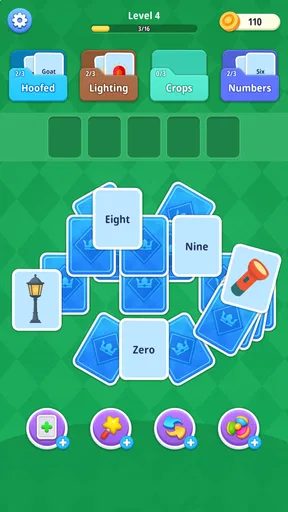
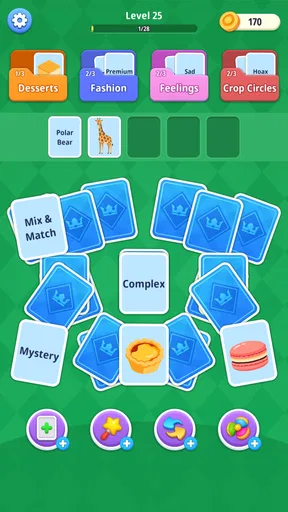
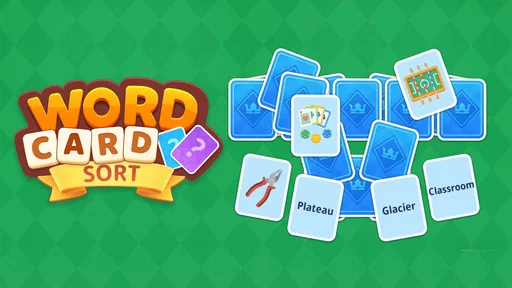
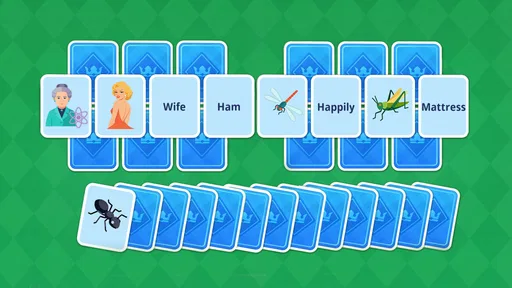
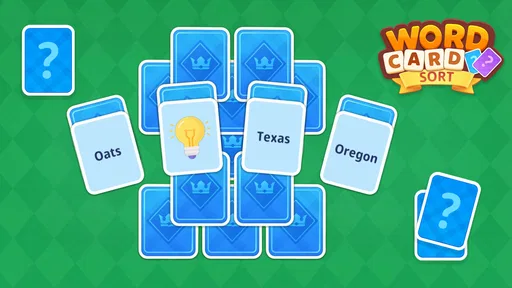
Our Review of Word Card Sort: Solitaire
 Analysis by Appyee
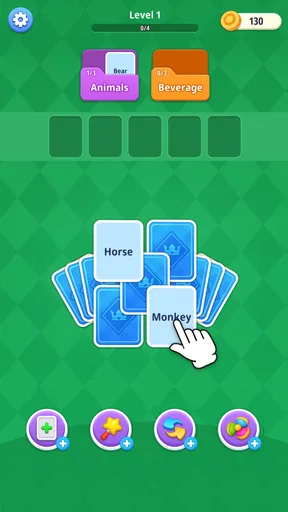
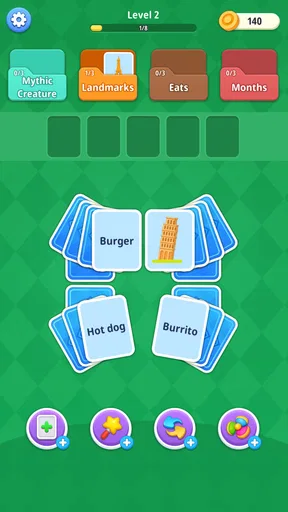
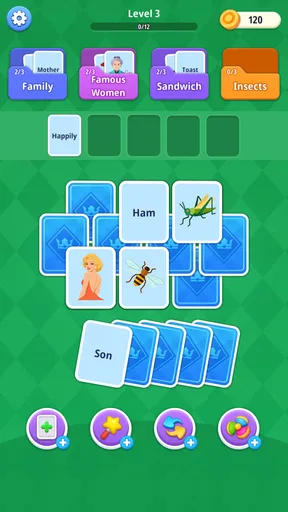
I approached Word Card Sort: Solitaire as a small, focused word game rather than something meant to replace a full card-game collection. That distinction matters. Its central appeal is the combination of word sorting and card association, so the challenge is less about fast reactions and more about noticing relationships, organizing information, and making a choice before the board becomes confusing. After spending time with it, I see a game that fits short thinking breaks especially well, while still offering enough mental friction to keep a familiar puzzle format from feeling completely automatic.
The game is made by BitEpoch and sits in the word category, although the solitaire framing gives it a different rhythm from a traditional crossword or a straightforward word-search title. It is free to start, rated for Everyone, and currently available for devices running Android 6.0 or later. Its store presence shows a 4.9 average from around 320 ratings, with over 10K installs, which suggests that its compact idea has found an appreciative early audience. I would not treat those figures as a substitute for personal preference, but they do make the game worth considering if you enjoy quiet, puzzle-focused sessions.
What to consider before choosing this word puzzle
The first question is what kind of concentration you want. If I am looking for a game that fills a few minutes while I am waiting for an appointment, a sorting puzzle is more suitable than a long narrative adventure. I can begin with a simple goal, inspect the available words and cards, and stop when my attention is needed elsewhere. On the other hand, if I want a rapid score chase, a large vocabulary challenge, or a deeply strategic solitaire simulation, this is probably not the first game I would choose.
The important decision criterion is tolerance for interpretation. The game asks me to associate words and sort them, so success depends on recognizing the intended connection rather than merely tapping the most obvious item. That makes the experience more thoughtful than a purely reflex-based mobile game, but it also means that an unclear association can feel more frustrating than a missed swipe. I recommend it most strongly to players who enjoy pausing over a clue and testing a theory.
Another consideration is how you feel about a free game with optional purchases. The game costs nothing to begin, but its in-app purchase range runs from $1.99 to $99.99 per item. That is a wide range, and it is worth keeping in mind before treating the game as a completely cost-free hobby. I would start without spending anything, learn whether the puzzle loop genuinely suits me, and only then decide whether any optional purchase adds enough value to justify it.
Finally, think about screen size and playing conditions. A word-and-card layout benefits from being able to see several items at once. I found this type of game more comfortable when I was not rushing and could compare the visible choices carefully. It is a better fit for a calm break than for playing while walking, commuting through a crowded station, or dividing attention between several tasks.
Why the sorting-and-association format works
The strongest idea here is the blend of two familiar mental actions. Sorting gives the session structure: I am not just searching for isolated words, but trying to place items into a sensible arrangement. Association adds uncertainty, because the connection may be based on meaning, category, or a relationship that becomes clearer after I inspect the surrounding cards. That combination creates a useful middle ground between a classic word puzzle and a solitaire-style board.
I also like that the format encourages a different kind of attention from a crossword. In a crossword, a letter placed early can guide later answers, and the grid itself is the main framework. Here, I am thinking more about groups and links. This makes the game approachable for someone who does not want to commit to a long puzzle, while still giving experienced word-game players a reason to slow down and examine the board.
A practical benefit is that the format naturally supports interrupted play. If I have only a short window, I can focus on one visible decision instead of needing to remember a long chain of clues. That makes it useful during a coffee break or at the end of the day when I want some mental activity without starting a demanding game. The trade-off is that interrupted play can make an ambiguous board harder to resume because I may forget which associations I had already considered.
Where this game is at its best
The best reason to try it is its focused mental pace. Word Card Sort: Solitaire does not need a complicated premise to be engaging. Its appeal comes from the small act of turning a messy collection of words and cards into an organized answer. I enjoyed the moments when an initially loose connection became convincing after I compared it with the other available choices.
It is particularly well suited to players who like word games but want something less demanding than a full daily puzzle routine. I can play with a relaxed mindset, yet the decisions still feel meaningful. This is also a good choice for someone who likes solitaire’s orderly presentation but wants more language-based thinking than simply arranging cards by suit or rank.
Another strength is its broad age suitability. The Everyone rating makes it easier to consider for mixed-age households, although individual enjoyment will still depend on vocabulary and patience. I would be comfortable suggesting it to a family member who likes casual puzzles, especially if they prefer recognizing patterns and categories over managing timers or competing directly with other players.
The game also works as a gentle warm-up for language-focused thinking. I would not describe it as a formal learning tool, but sorting words can encourage attention to meaning, grouping, and context. For a student or language enthusiast, it might serve as a light break between more serious study sessions. The useful boundary is not to expect structured lessons; the value is in exercising flexible recognition, not following a curriculum.
Small habits that make the puzzles easier to read
My first useful habit was to avoid committing to the first association that looked plausible. A word may appear to match one card, but the stronger answer is often the one that leaves the rest of the board easier to organize. I began treating each choice as part of a larger arrangement rather than as an isolated answer. That reduced the feeling of being trapped by an early guess.
A second habit was to separate obvious relationships from uncertain ones. When I saw a clear pair, I mentally set it aside and spent more time on the items that could fit several groups. This is a simple workflow, but it prevents the ambiguous choices from dominating the entire session. It also makes the game feel less random because I am actively narrowing the possibilities instead of tapping around without a plan.
I found it helpful to use a two-pass approach. On the first pass, I scanned the whole board and looked for broad themes. On the second, I checked whether the proposed groups still made sense together. This is more effective than solving from the top of the screen downward, because visual order does not necessarily reflect logical order. The technique is especially useful when several words share a surface-level connection.
My third tip is to treat a mistake as information rather than simply a failure. If a grouping does not work, I revisit the rejected items and ask what alternative connection they might share. That change in attitude matters in a game built around association. The board becomes a process of elimination, and the wrong direction can reveal which interpretation is too broad.
Everyday use: a quiet break without a long commitment
Imagine having ten minutes before an appointment. I would rather open this than begin a game that needs a long uninterrupted session. I can inspect a puzzle, work through a few relationships, and put the phone away when my name is called. The word-and-card format gives the break a clear purpose, while the lack of a need for rapid movement makes it reasonably comfortable for a calm waiting-room setting.
It can also suit an evening routine when I want to stay mentally engaged without adding noise. Compared with a competitive multiplayer game, this kind of puzzle lets me control the pace and avoid the pressure of another person’s schedule. Compared with scrolling through short videos, it gives me a small problem to solve. That does not make every session relaxing—an especially unclear association can still test my patience—but the overall structure is more deliberate than passive entertainment.
For families, I can imagine two people looking at the same board and discussing which words belong together. That turns a solo puzzle into a casual conversation without requiring a formal multiplayer mode. I would not buy it specifically as a cooperative game, because the core experience remains individual, but the associations are easy to talk through with someone nearby.
Where another type of game may fit better
The main limitation is that this is a specialized experience. If you want a traditional solitaire game built around familiar card rules, this word-focused format may feel like the wrong kind of challenge. A classic solitaire title is better when the satisfaction comes from planning card moves, revealing hidden cards, and managing suits or ranks. Here, language and association are the center of attention, so players who dislike word puzzles may not find the card presentation enough to compensate.
A crossword or word-search game may also be a better fit for someone who wants a clearly defined vocabulary task. Those formats usually tell me more directly what kind of answer I am seeking. Word Card Sort: Solitaire is more interpretive, which is its personality but also its possible weakness. If I prefer exact clues, letter patterns, or a visible grid, I may feel more comfortable with a conventional word-puzzle alternative.
Players who need constant novelty may want to compare it with a broader puzzle collection. A focused sorting loop can be satisfying, but it does not automatically provide the variety of several unrelated game types. Similarly, people motivated mainly by leaderboards, head-to-head competition, or fast reaction challenges should look elsewhere. Nothing about the central concept suggests that those are its priorities, and forcing the game into that role would miss what it does well.
There is also a question of vocabulary comfort. Because association is central, a player may occasionally feel that a connection depends on a word they interpret differently. That is not necessarily a flaw, but it can create friction for younger players, second-language learners, or anyone who prefers puzzles with less room for interpretation. In those cases, a more visual matching game may be more welcoming.
What the free model means for a long-term choice
Starting is straightforward because the game is free. That removes the biggest barrier to testing the basic loop, and I think a trial-first approach is sensible here. Play enough to discover whether the sorting decisions feel satisfying rather than merely tolerable. If I am already questioning the associations during the opening sessions, paying later is unlikely to transform the experience into a favorite.
The optional purchase range deserves a deliberate approach. I would not spend simply because I had reached a difficult moment or wanted to remove a temporary annoyance. Instead, I would ask whether the purchase changes how I use the game often enough to matter. This is especially important for a casual title: a large purchase can be harder to justify when the app is used only occasionally.
The current version is 1.130, and the game was released on January 9, 2026. Those details place it in a relatively early stage of its life compared with long-established word-game brands. For me, that means I would keep expectations practical. I would judge the present puzzle experience on its own merits rather than assuming it has the depth or polish of a much older franchise. The positive side is that players who enjoy discovering a focused new format may find it appealing before it becomes familiar.
Switching from another word game should not require changing your whole routine, but it does require changing how you evaluate progress. In a crossword, I might track letters; in a word search, I scan for shapes; in traditional solitaire, I plan card movement. Here, I need to compare meanings and preserve flexibility. That mental adjustment is small, but it is the real cost of switching, and some players will enjoy it more than others.
Who should install it, and who should skip it
I would recommend giving it a try if you enjoy word categories, visual organization, and puzzles that reward patience more than speed. It is a strong candidate for short breaks, quiet evenings, and casual family discussion. It is also worth considering if traditional solitaire sounds appealing but feels too repetitive without a language element.
I would be more cautious if you need a game with a clear competitive ladder, a large range of modes, or a highly predictable rule set. I would also skip it if word associations tend to feel arbitrary to you, because that interpretive element is not a side feature—it is the reason the game exists. A standard solitaire app, crossword, or fast matching game may be a better use of your time depending on what kind of satisfaction you want.
Device compatibility is fairly broad because the minimum requirement is Android 6.0, but compatibility alone does not determine comfort. I would still prefer a screen that gives me room to inspect the cards and words without repeatedly losing track of the layout. On a smaller display, the game may remain playable, yet the thoughtful comparison that makes it interesting could become less pleasant.
My recommendation after weighing the trade-offs
My recommendation is positive, with a clear condition: try it for the sorting-and-association loop, not because it carries the solitaire label alone. If you want a calm word puzzle that turns card-style presentation into a test of grouping and judgment, this is an easy game to sample. Its strongest moments come when I stop chasing the first obvious match and build a coherent solution from the whole board.
I would keep it installed as a compact option rather than as my only puzzle game. That gives it the right place in a mobile library. When I want a quiet challenge, it offers something more active than passive scrolling. When I want exact clues, competitive pressure, or classic card strategy, I would switch to a different category instead of expecting this game to cover every need.
Overall, Word Card Sort: Solitaire earns its recommendation through a specific idea executed for casual play: combine word grouping with the orderly feel of cards. BitEpoch’s game is free to begin, suitable for Everyone, and accessible on older Android versions, while its optional purchases mean I would approach long-term spending carefully. For readers who enjoy flexible word reasoning and short, thoughtful sessions, it is a worthwhile download. For those seeking traditional solitaire rules or a broad, high-intensity puzzle platform, choosing an alternative will likely be the better decision.
Verdict
Strengths of Word Card Sort: Solitaire
- Simple card-sorting gameplay that is easy to learn
- Short rounds make it suitable for quick breaks
- Relaxing pace without demanding reflexes
- Works well for casual, low-pressure play
- Clear visual layout keeps the board easy to follow
Limitations of Word Card Sort: Solitaire
- Repetitive gameplay may lose appeal over longer sessions
- Limited strategic depth compared with traditional solitaire
- Some levels can feel dependent on the available card order
- Ads may interrupt the experience between rounds
- Progression may feel slow for players seeking more variety
Other Releases by BitEpoch
View All
Similar Picks in This Category
View All
Word Search - Word Puzzle Game
Bluetile4.8

Word Search Quest - Puzzles
Blackout Lab4.8

CodyCross: Crossword Puzzles
Fanatee, Inc.4.7

Words of Wonders: Crossword
Fugo Games4.9

Wordscapes: Word puzzle game
PeopleFun4.7

Word Search Explorer
PlaySimple Games4.9
Frequently Asked Questions
What is Word Card Sort: Solitaire, and how is it played?
Word Card Sort: Solitaire combines classic solitaire-style card movement with word and category sorting challenges. Instead of only building traditional suits, you generally organize cards according to matching words, themes, or logical groups. Each level is designed as a short puzzle session, making the game suitable for quick breaks while still requiring concentration, pattern recognition, and thoughtful planning.
Is Word Card Sort: Solitaire free to download and play?
The game can typically be downloaded for free, allowing players to try its main levels without an upfront purchase. However, free mobile games may include optional advertisements, extra rewards, or in-app purchases for boosters and other items. Before spending money, check the store listing and the purchase settings on your device, especially if children may use the same phone or tablet.
Does Word Card Sort: Solitaire work offline?
Many of the game's core sorting and solitaire puzzles may remain playable without a constant internet connection, which is useful during travel or when your signal is weak. Nevertheless, features such as advertisements, cloud synchronization, updates, leaderboards, or promotional rewards may require connectivity. It is best to launch the game online at least once after installation and test offline access yourself.
Is Word Card Sort: Solitaire suitable for beginners and casual players?
Yes, the game is aimed primarily at casual players and is easy to understand after a short introduction. The combination of familiar card mechanics and word-based sorting makes the early stages approachable, while later puzzles can demand more careful decisions. Players who enjoy vocabulary games, solitaire, and relaxing logic challenges should find the learning curve comfortable without needing advanced gaming experience.
What permissions or device requirements should I consider before installing it?
Before downloading Word Card Sort: Solitaire, review its current Google Play or App Store listing for supported operating-system versions, storage requirements, and privacy disclosures. The exact permissions can change with updates, but games commonly request network access for ads, analytics, or online services. Installing only from the official store and checking the developer information is the safest approach.
Play our best games!


